Stay Ahead
How Smarter Experiment Logging Helps Scientists Focus on Discovery
Date
Aug 13, 2025
Author
Renaud Joannes-Boyau
How Smarter Experiment Logging Helps Scientists Focus on Discovery
By Renaud Joannes-Boyau
Every scientist knows the tension between doing the science and documenting the science. Experiments demand full attention, yet proper record-keeping is essential for reproducibility, credibility, and progress. Too often, logging experiments becomes a chore—something squeezed in after the fact, when details risk being forgotten or misremembered.
But what if experiment logging didn’t compete with discovery? What if it empowered it?
The Documentation Dilemma
Science is built on records. Without clear notes, we lose the context behind our data. We can’t repeat results, share insights, or defend our findings. Institutions and journals require traceability, yet the systems we use—paper notebooks or outdated digital tools—often make documentation slower and more painful than it needs to be.
The result is a paradox: the very process meant to safeguard our research ends up stealing time away from it.
Why Smarter Logging Matters
Smarter experiment logging isn’t about adding more complexity. It’s about stripping away friction and making documentation fit naturally into the scientific workflow. When tools are designed for scientists, not just administrators, three things happen:
Logging becomes real-time – Notes, photos, and data can be captured during the experiment, not after.
Records become structured – Inputs are automatically organized into sections like Materials, Methods, and Observations.
Knowledge becomes searchable – Past experiments are easy to retrieve and compare, instead of locked away in forgotten notebooks.
This doesn’t just make life easier—it changes how research unfolds.
From Logging to Learning
When documentation is efficient, scientists spend less energy on admin and more energy on science. That shift unlocks:
Sharper focus: No need to split attention between running an experiment and scribbling notes.
Faster insights: Clean, structured data makes it easier to see patterns and anomalies.
Stronger collaboration: Teams can build on each other’s work without waiting for summaries or translations of handwritten notes.
Greater reproducibility: Standardized, accurate records make findings more credible and more impactful.
Ultimately, smarter logging doesn’t just save time—it accelerates discovery.
The Future of Experiment Logging
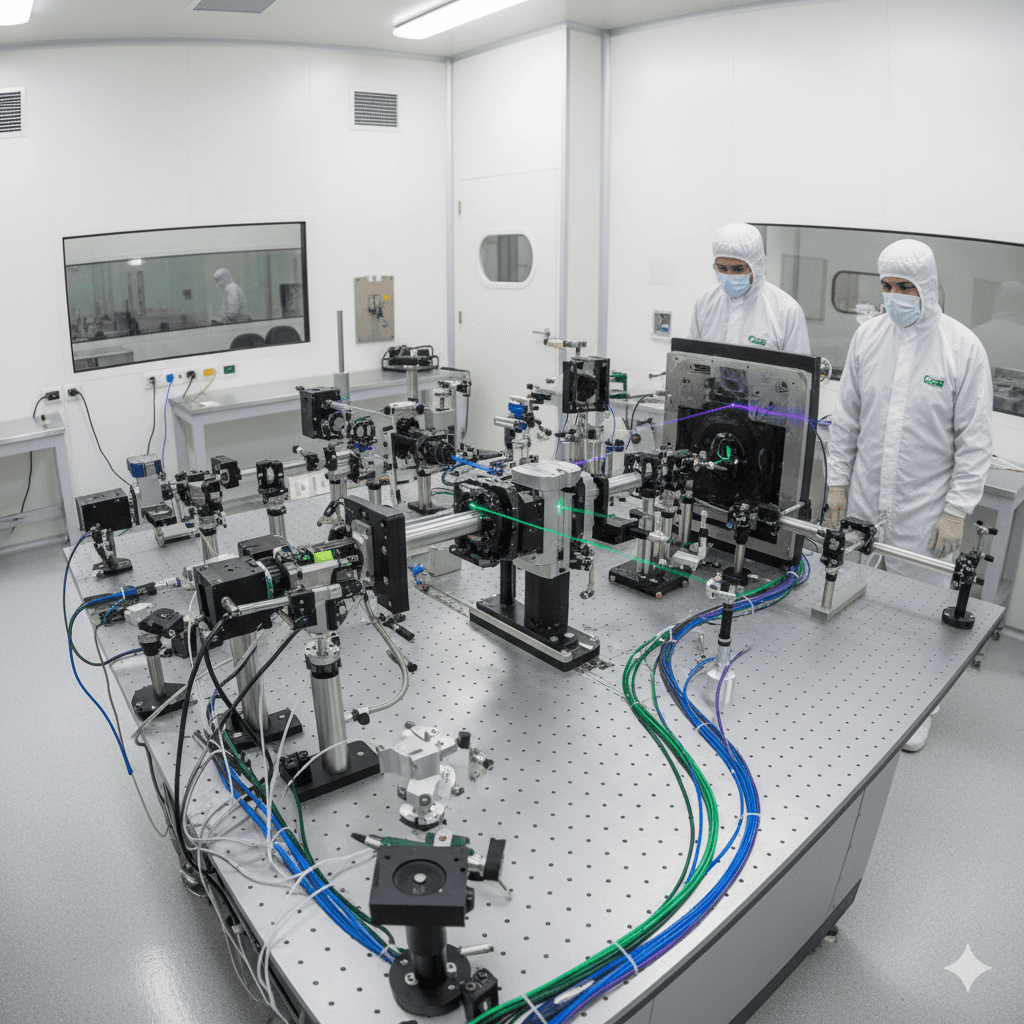
We are entering an era where tools can finally keep pace with the realities of the lab. Voice dictation, photo capture, AI-powered structuring, and cloud-based archives all reduce the distance between doing the experiment and documenting it.
Instead of asking scientists to bend their workflows around software, we can design software that bends around the way science is actually done.
Closing Thoughts
Discovery is why most of us became scientists in the first place. Yet the weight of documentation often pulls us away from the very curiosity that drives our work. Smarter experiment logging is not just a technical upgrade—it’s a way to return focus to where it belongs: on exploring, questioning, and uncovering new truths.
The more we streamline how we record science, the more space we create for doing science. And that’s where discovery truly begins.